A Shifting Perspective on SMI
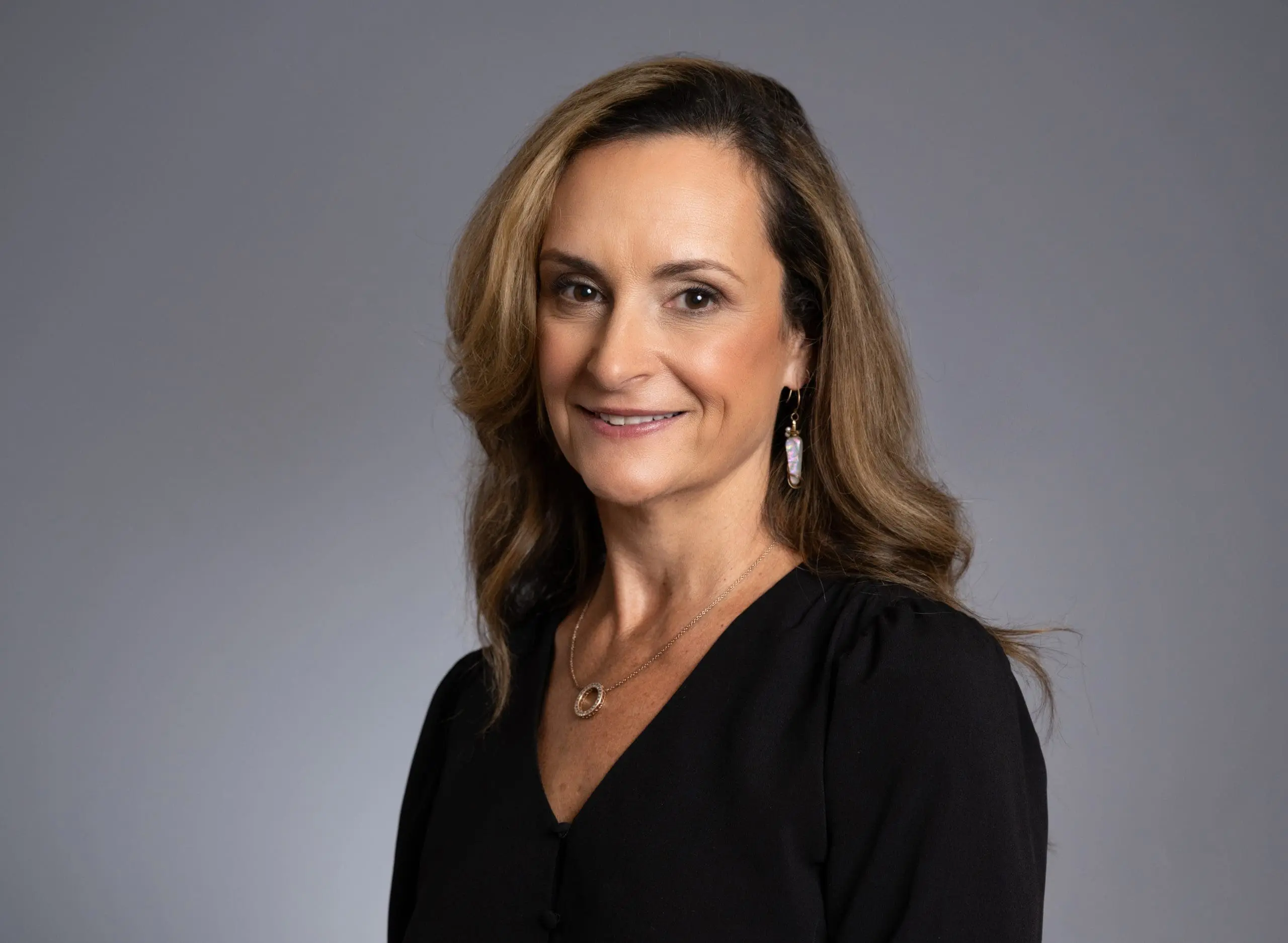
By Lindsay Moran, Director of Communications, TAC
In January 1999, I was a young recruit working for the Central Intelligence Agency (CIA) on my way to headquarters when I received a call from my mother. “Have you seen the front page of The New York Times?” my mom asked. I had not. “Well look as soon as you can.”
Which I did, scurrying to the CIA’s library as soon as I scanned my badge. What I saw on the front page shook me to my core. A man whose face I didn’t immediately recognize, but whose name I did – Andrew Goldstein, the son of my mother’s cousin, Edward. In the photo, Andrew looked disheveled and bewildered, handcuffed behind his back, and flanked by police officers escorting him from the scene of a crime.
To my mounting horror, the article informed me that Andrew, then 29, had pushed a young woman named Kendra Webdale, a 32-year-old aspiring journalist, into the path of an oncoming subway train in Manhattan. She was instantly killed.
It was only after Kendra’s murder that I learned that Andrew had showed signs of severe mental illness (SMI) in his late teenage years and had been diagnosed with schizophrenia. Over several years, he had periods of improvement with hospitalization and medication, but he had been discharged from a medical facility and was living on the streets in the days before he killed Kendra. He had never managed to maintain treatment for long outside of the hospital.
What was more horrifying to discover was that Andrew – semi-cognizant that he was a danger to himself and others – had been banging on the doors of hospitals, begging to be taken in. For whatever reason, he was not admitted.
Although we are the same age, I did not know Andrew well growing up – having seen him only at weddings and bar mitzvahs over the years. All that I did know of him was that he was a bright, seemingly normal kid. I recall family members talking about his genius capacity for mathematics.
The CIA is not the kind of place where you share information about your personal life with your colleagues, let alone that you’re related to a convicted killer – Andrew pled guilty and was sentenced to 23 years in prison – so I pushed the incomprehensible tragedy into the recesses of my mind.
But Andrew’s story, and the devastating consequences of his only sporadically treated illness, haunted me. Mostly, I wondered: how had Andrew’s family, my extended family, allowed this to happen? Why hadn’t my Uncle Edward, a prominent doctor, intervened to get Andrew help? How had my cousin, once so bright and promising, ended up living on the street? Why had his family allowed him to become a menace to society – a murderer?
The shame I felt over our family’s silence and inaction was compounded by the grace, compassion, and extraordinary efforts of the Webdale family, who pushed for the passage of Kendra’s Law, which became effective the same year as their daughter’s murder. The law granted New York judges the authority to require people who meet certain criteria, including acts of harm to self or others, to continue psychiatric treatment within the community via assisted outpatient treatment (AOT). Kendra’s Law could have helped keep Andrew on his medication and off the streets and prevented him from that fatal encounter. Even in the wake of their unspeakable loss, the Webdale family recognized that Andrew was a victim himself, of our broken mental health system. They wanted meaningful change.
Andrew, meanwhile, spent his adult life incarcerated, where his illness continued to go untreated, and where he suffered the expected trauma and abuse of someone with SMI in prison.
I left the CIA and ultimately forged a career in nonprofit communications. Two years ago, I joined TAC, an organization I had not heard of before, but where it turns out Andrew Goldstein was a very well-known figure and the Webdale family even more so.
It was not until joining TAC that I learned how wrong my assumptions about Andrew’s family had been. Somehow, I had always assumed that Uncle Edward had forsaken him and was ashamed of his “crazy” son.
At TAC, I’ve had the transformative experience to work with, and on behalf of, countless mothers, fathers, siblings, and spouses of individuals with SMI. I have heard one after another gut-wrenching stories of relatives and caregivers trying against all odds to get help for their loved ones. I have colleagues who are moms who have had to go to sleep not knowing if their sons have a safe place to sleep, and others who have lost a child with SMI to suicide. I have colleagues whose mentally ill siblings are incarcerated, with no hope of treatment or release.
I have learned that none of these families have forsaken their children or loved ones – to the contrary, they have made it their life’s mission to get them help, and to advocate for and support other families living in the hellscape of our broken mental health “system.” As a mother now myself, with two sons approaching the age typical for the onset of schizophrenia, I am hypervigilant for signs of depression, distress, or disassociation.
A few years ago, I stumbled across an article about my cousin Andrew in which he is quoted as saying, “It’s a horrible thing, what happened in that station . . . but if I would have taken my meds, I would have been in the right frame of mind.”
I don’t know that Andrew’s story will ever stop haunting me, but I do know – I have learned – that the villain in the story is not Andrew, and it is not my Uncle Edward, or any of Andrew’s family; it is the system that fails to provide help for those who need it most.