RESEARCH WEEKLY: The anatomical basis of anosognosia
(May 24, 2016) One of the most important, but difficult to understand, aspects of serious mental illness is that approximately half of all people with schizophrenia and bipolar disorder do not realize they are sick – a condition called anosognosia. Individuals with this co-occurring disorder really believe that they are being followed by the CIA or that God is speaking to them through the voices they hear. They believe there is nothing wrong with them; therefore, they see no reason to take medication.
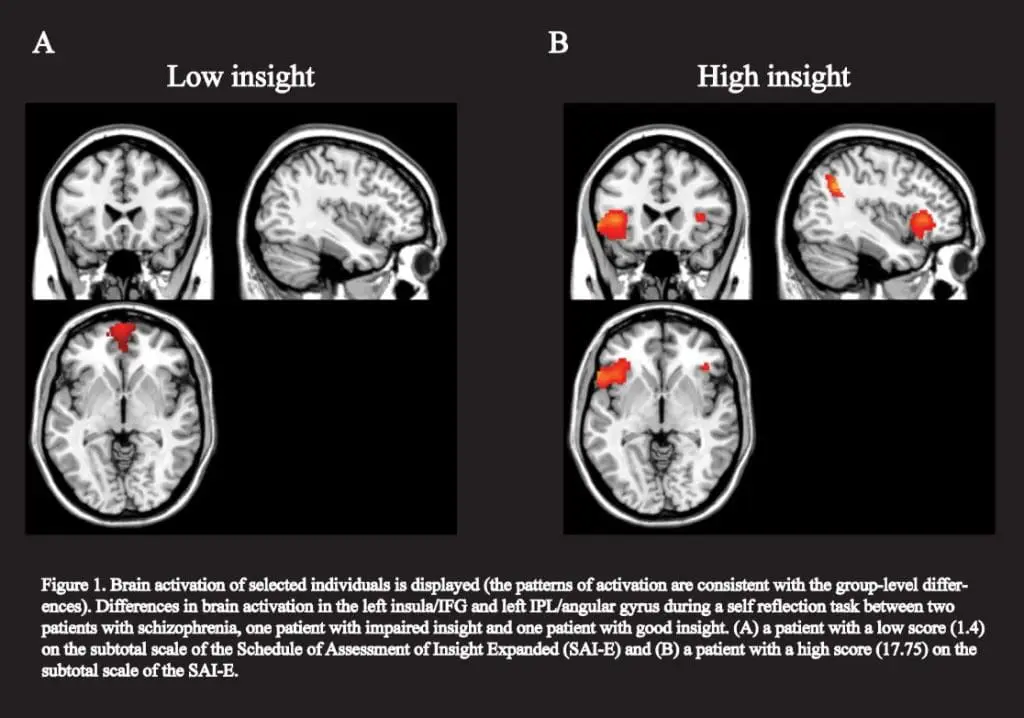
This lack of awareness of illness is seen in most cases of advanced Alzheimer’s disease and Huntington’s disease. Neurologists have known about it for more than 100 years, but psychiatrists just became aware of it about 25 years ago. Since then, the question has been: Why do some people with schizophrenia or bipolar disorder have anosognosia while other people with the conditions are fully aware of their illness?
Brain Differences
The answer to this question is now very clear: The brains of people who have and do not have anosognosia are different, and more than 30 studies support this conclusion.
The Stanley Medical Research Institute (SMRI), a supporting organization of the Treatment Advocacy Center, has been keenly interested in this research because of its important implications for medication adherence. For this reason, SMRI supported one of the early studies of the condition.
The most recent studies are using sophisticated techniques, with results that have become increasingly interesting.
Two of these studies come from Toronto and Moscow. A research group at the University of Toronto in 2014 published a study using the newer functional magnetic resonance imaging (fMRI) technique and reported that people with schizophrenia who have anosognosia show evidence of connectivity problems between specific brain areas. Another was carried out by researchers in Moscow using postmortem brains from the SMRI brain collection. These researchers found fewer glial cells – part of the white matter connectivity system of the brain – in people with anosognosia.
New techniques for studying the brain are yielding evidence-based findings for understanding the anatomical basis of anosognosia.
For More about Anosognosia
The Miyashiro family of Hawaii learned about anosognosia the way so many families do – when a family member, the mother in this case, became gravely ill and didn’t believe anything wrong. After seven years in the revolving door of struggle and searching for hope and help, “Mom” is now in recovery. The family shares their story and offers encouragement and resources to others at the Anosognosia Caregiver Alliance.
Answers to “What is anosognosia?” can be found on the Treatment Advocacy Center website.
References:
Vostrikov, V.M. et al. (2013). Reduced oligodendroglial density in the inferior parietal lobule and lack of insight in schizophrenia. European Journal of Psychiatry.
Gerretsen, P. et al. (2014.) Impaired insight into illness and cognitive insight in schizophrenia spectrum disorders: Resting state functional connectivity. Schizophrenia Research.