Family Relationships: Separating the Illness from the Person
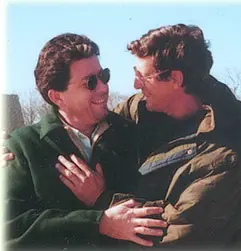
by Dr. Xavier Amador
When my brother Henry developed schizophrenia, the impact rippled through our family in a number of specific ways. I have seen the same in countless families I have worked with over the past forty years. When serious mental illness (SMI) like schizophrenia appears in a family, we usually see chaos. We see the chaos it creates for the sufferer, but because our attention is laser focused on that person, we are too often blinded to the turmoil it causes to our relationships with each other. There are a range of emotions that fuel the chaos and discord that results. Among them are guilt, anger and depression.
My mother used to feel so guilty about “giving him schizophrenia.” She had a family history of the illness and felt horrible that she “gave it to him.” And, she thought she could have done more to be a better mother when he was growing up; she was certain that somehow her actions played a role.
And like many siblings, I had survivor’s guilt. Why should my brother lose so much — the ability to work, form close relationships and so much more — while I had all these things he longed for. What my mother and I did not know at that time is that SMI’s are no-fault brain disorders. She did nothing to cause his illness, and I was in no way hurting him by having love and work. When I was able to help him accept treatment and achieve these things in recovery, it helped to free me from guilt, but still, he was nowhere near as far along as I was: Married with children and a successful career. And with our guilt we sometimes fought with each other, projecting and blaming each other. Family discord, in this context, often stems from unnecessary and pointless guilt. The key to us all becoming free of such guilt was understanding how much of the devastation Henry was experiencing came solely from the brain disorder and not from anything we had done. This was accomplished by becoming educated about schizophrenia and its causes.
My mother and siblings also felt a lot of anger towards Henry. I was spared this emotion early on because of my training to become a clinical psychologist, which was happening during the early years of his illness. Our mother was angry at Henry for accusing her of having been abusive when no abuse had, in fact, occurred. I was able to help her with that by sharing with her how to separate the illness from the person.
By understanding that the delusional accusations were not her loving son but instead his heartless illness. When she learned to separate the illness from the person, her anger about being accused of being a horrible abusive mother disappeared as she learned it was chemical chaos in his brain talking, not her son. My siblings had a harder time letting go of their anger about why Henry was refusing treatment in the early years of his illness. He was blamed for being in denial, stubborn, uncaring and irresponsible. It took longer than with my mother, but when I helped them learn about anosognosia (see my first blog) they stopped blaming him for refusing treatment and with the loss of blame came a loss of their anger. Once again, the key was learning to separate the illness from the person.
Another insidious emotion swept through our family soon after the illness first hit him: Depression. We were all depressed about all that had been lost. How Henry had lost the ability to complete college, work, make and keep friends or a girlfriend. It was sad. I reflected on this as I gave his eulogy after his untimely death in a car accident.
Standing at the lectern, looking out at the people who had come to my brother’s funeral, I was struck once again by what a full life he had had once he accepted treatment. His friends filled the church, prompting several of my family members — who had had very little contact with Henry after he became ill — to say things like “I had no idea he had this many friends!” and “I never knew his life was so full.” They felt sad. I didn’t feel sadness about having missed out. My brother and I were very close and loved each other’s company immensely. The reason I had this relationship with Henry, while others in our family did not, is not because I am a better person; I am no saint. The reason is that after he first became ill, I mourned who he had been before, while most of my brothers and sisters (there are nine of us) seemed unable to; they were stuck on who Henry had been, rather than on who he had become.
We all felt depression when he first got ill. It was impossible to accept that he was no longer there in the way he had been. When he became ill with schizophrenia, we all longed for the “old Henry” and made little room in our hearts for the “new Henry.” After Henry became ill, many things changed. But not the fact that he was smart, handsome, kind, and loving. Or how he could make me laugh — splitting-your-gut laughter — in any situation.
Many people wrote to me to offer their condolences, to share their good memories of Henry, and to wisely say how lucky I was to have him as my older brother. They are right. But they left out one vital thing, a lesson I learned anew as I reflected on the seemingly insurmountable task of saying goodbye to him all over again. I was especially fortunate that I was able to let go of my depression and mourn after he first became ill — to say goodbye to what I had hoped for — so that, during the 25 years that followed, I could laugh with him, make new good memories with him, and realize just how lucky I was to be his “baby brother.” My earlier depression was transformed to gratitude.