Listen to Us: The Unique Experience of Women with Severe Mental Illness
Women with severe mental illness face unique experiences and obstacles compared with men with severe mental illness and other women without schizophrenia, bipolar disorder or major depression. Severe mental illness also puts women at higher risk for the negative outcomes that all women are already at heightened risk for, such as sexual assault.
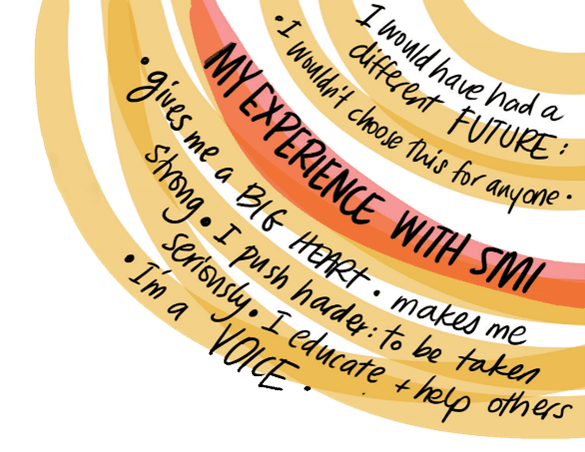
While there is some research examining how women with severe mental illness are disproportionately impacted, little of it involves listening to their own narratives. To help fill this gap, the Office of Research and Public Affairs conducted focus group interviews to hear directly from women with severe mental illness about the unique experiences, challenges and barriers they face in achieving the lives they want. A graphic recorder was present for the discussions to create a visual representation of the results and capture the conversations.
Analysis of the focus group discussions revealed that women with severe mental illness face compound marginalization because of their gender and mental illness and the stigma, social isolation and disparate treatment that comes with belonging to a marginalized group. There is much to learn by listening to women, and their experiences can help inform solutions that address these disparities.
Key findings:
- Women with severe mental illness have long faced institutional biases because of their gender and diagnoses
- Their symptoms are less likely to be taken seriously by clinicians and they are more likely to be misdiagnosed.
- Yet many women do not see or feel these disparities because gender inequality and the stigma of having severe mental illness are so longstanding and deeply ingrained.
- There are larger barriers to treatment for women with severe mental illnesses than for men with the same disorders, including greater difficulty in accessing inpatient psychiatric beds.
- Social isolation and relationship challenges are common problems for women with severe mental illness. Motherhood is possible and can be fulfilling for those women who want children. However, some women feel that the burden of their illness is too much or that they do not want to pass on the genes associated with their mental illness to their children.
- The long road to stability can be empowering for women with severe mental illness. Many of the focus group participants felt inspired to share their stories with the hope of educating and demonstrating to other women that living a fulfilling life is possible.