Personally Speaking: It’s About the Beds
Leslie Carpenter, Iowa Family Advocate
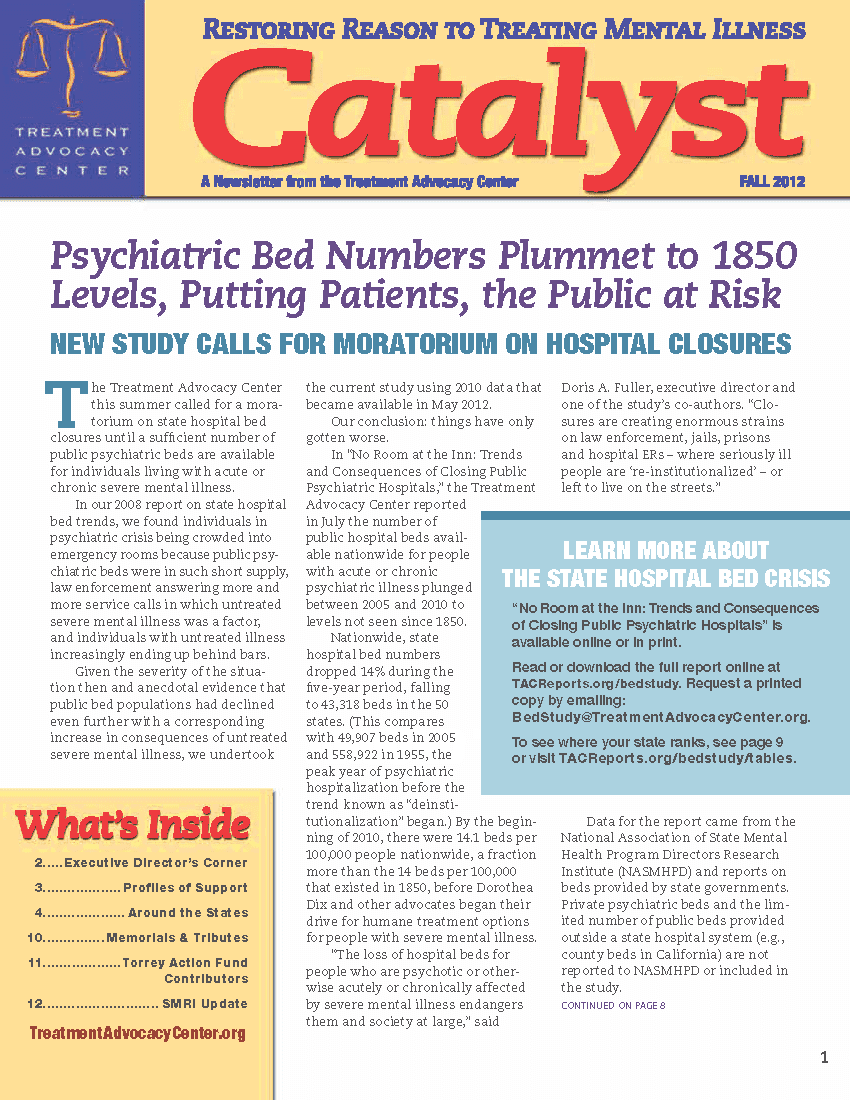
Reading Delayed and Deteriorating: Serious Mental Illness and Psychiatric Boarding in Emergency Departments, I am reminded of the immense stress our family experienced every time we had to take our son to the hospital during times of crisis to seek admission. The waiting, the hoping, the sheer tension of not knowing if we could get him admitted or where he would end up was so very stressful for him and for us. In fact, these experiences led my husband to identify his first advocacy goal back in 2015: to change the admission process at the University of Iowa Hospital.
All across my state and all across the country, families experience this scenario and this trauma every single day. Here in Iowa it is especially bad, as we are ranked 51st in the country for the number of state beds by population, with only 64 for adults and 32 for children. This limited number of long-term options directly influences our ability to access acute care hospital beds, many of which are occupied by people with long-term, but not acute, care needs and no more appropriate place to go for less restrictive care.
Patients wait. Some give up, and some are turned away for not meeting the ridiculous criteria for admission of being “a danger to self or others.” All of these individuals suffer during the waits. The emergency department staff are simply not trained to help the patients in the same way that mental health professionals are, and so the patients feel they are not listened to and not cared about. This only further adds to their suffering.
Here in Iowa City there has been progress, as the University of Iowa opened a crisis stabilization unit, allowing psychiatric patients to be helped there by the psychiatry staff. This has helped to reduce emergency department boarding, admissions and cross-state transfers. Things are not perfect, but this has is a model of care that we hope can be replicated in other hospitals as well. Most importantly, it demonstrates that the conclusions of TAC’s report are correct: when states increase the number of beds available, these harmful wait times go down.
Leslie Carpenter is a serious brain disorders advocate from Iowa City. She wrote a piece in September about the impact of Iowa’s bed shortage on its citizens for Bleeding Heartland entitled “It is about the beds”.
We at the Treatment Advocacy Center commend Leslie and family member advocates just like her who join us in fighting for mental healthcare reform. #TogetherintheFight