Alabama Severe Mental Illness Resources & Helpful Info
The term severe mental illness (SMI) includes schizophrenia spectrum disorders, severe bipolar disorder, and major depression with psychotic features. These disorders put an individual at high risk for criminalization and preventable tragedies such as victimization and suicide. Every state has different laws and policies around accessing treatment for SMI and some states have more resources and treatment options than others. Here you will find state-specific resources for navigating the SMI treatment system, an evaluation of local laws, as well as state SMI data and research.

Jump to section:
- Alabama Department of Mental Health (mh.alabama.gov) Resources and contacts
- Mental Health Resources in Alabama (rtor.org) Nonprofit provides an online form for personalized assistance from a resource specialist
- Mental Health Technology Transfer Center Network (mhttcnetwork.org/southeast region) Fact Sheet overview of state services
- Governor's Office on Disability (good.alabama.gov) Disability benefits planning
- Alabama Medicaid SMI/SED Demonstration Implementation Plan (medicaid.alabama.gov) Detailed information about system redesign
- NAMI Alabama (namialabama.org) Support groups, training, information
- Alabama Disabilities Advocacy Program (adap.ua.edu) Protection and advocacy for individuals with disabilities
- On Guard: Making Sensible Decisions about Guardianship (adap.ua.edu) Guidance booklet from the Alabama Disabilities Advocacy Program
- Homeless Service Organizations in Alabama | U.S. Department of Housing and Urban Development (hud.gov/states/alabama) Agencies listed by county
- Alabama Inmate Search (statecourts.org/inmate-search/alabama) Search for someone in prison, jail, work camp, or private facility by name or case number
- Alabama State Bar (alabar.org) Legal assistance
How many people in Alabama have SMI?
individuals with severe mental illness.
individuals with SMI who receive treatment in a given year.
of the adult population is estimated living with a SMI in the United States.
State psychiatric hospital beds in Alabama
2023 total beds: 408
- Civil beds: 268
- Forensic beds: 140
2023 beds per 100,000 people: 8
Click here for more information about state psychiatric hospital beds in Alabama.
A minimum of 50 beds per 100,000 people is considered necessary to provide minimally adequate treatment for individuals with severe mental illness. Alabama fails to meet this minimum standard.
For Additional Information
Data is a powerful tool to advocate for change. Curious about a specific data point in your state? Reach out to us at ORPA@treatmentadvocacycenter.org
Fast Facts on SMI in Alabama
Deinstitutionalization, outdated treatment laws, discriminatory Medicaid funding practices, and the prolonged failure by states to fund their mental health systems drive those in need of care into the criminal justice and corrections systems.
19%
7,800
408
19 to 1
2021 Alabama State Mental Health Agency's expenditures
Every state receives block grant funding from the federal government to provide mental health services to their community. Below is some information about how these dollars are spent and compares to other state spending.
$391,337,880
23%
$4,124
1.2%
Alabama's Treatment Laws
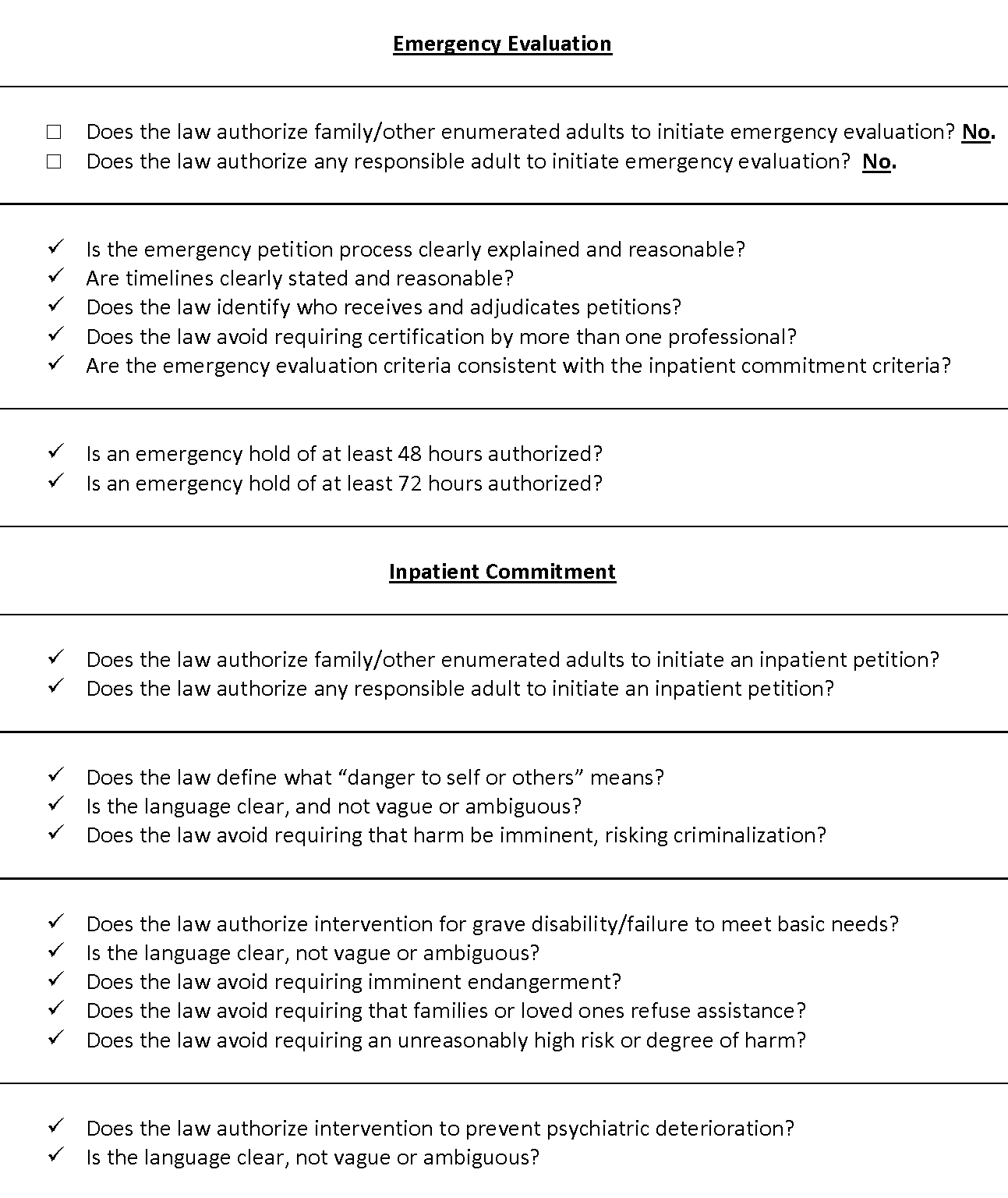
ALA. CODE § 22-52-91(a) 1. When a law enforcement officer is confronted by circumstances that give the law enforcement officer reasonable cause for believing that an individual within the county has a mental illness and that the individual is likely to pose a real and present threat of substantial harm to self or others, the law enforcement officer shall contact a community mental health officer. The community mental health officer shall join the law enforcement officer at the scene and location of the individual to assess the condition of the individual and determine whether the individual needs the attention, specialized care, and services of a designated mental health facility. 2. If the community mental health officer determines from the conditions, symptoms, and behavior that the individual appears to have a mental illness and poses a real and present threat of substantial harm to self or others, the law enforcement officer shall take the individual into custody and, together with the community mental health officer, deliver the individual directly to the designated mental health facility. 3. At the designated mental health facility, a responsible employee of the facility who is on duty and in charge of admissions to the facility shall be informed by the community mental health officer that the individual in custody appears to have a mental illness and is in need of examination and observation. 4. In determining whether an individual poses a real and present threat of substantial harm to self or others, all available relevant information shall be considered, including any known relevant aspects of the individual’s psychosocial, medical, and psychiatric history, in addition to the individual’s current behavior.
ALA. CODE § 22-52-91(a) 1. When a law enforcement officer is confronted by circumstances that give the law enforcement officer reasonable cause for believing that an individual within the county has a mental illness and that the individual is likely to pose a real and present threat of substantial harm to self or others, the law enforcement officer shall contact a community mental health officer. The community mental health officer shall join the law enforcement officer at the scene and location of the individual to assess the condition of the individual and determine whether the individual needs the attention, specialized care, and services of a designated mental health facility. 2. If the community mental health officer determines from the conditions, symptoms, and behavior that the individual appears to have a mental illness and poses a real and present threat of substantial harm to self or others, the law enforcement officer shall take the individual into custody and, together with the community mental health officer, deliver the individual directly to the designated mental health facility. 3. At the designated mental health facility, a responsible employee of the facility who is on duty and in charge of admissions to the facility shall be informed by the community mental health officer that the individual in custody appears to have a mental illness and is in need of examination and observation. 4. In determining whether an individual poses a real and present threat of substantial harm to self or others, all available relevant information shall be considered, including any known relevant aspects of the individual’s psychosocial, medical, and psychiatric history, in addition to the individual’s current behavior.
ALA. CODE § 22-52-91(a) 1. When a law enforcement officer is confronted by circumstances that give the law enforcement officer reasonable cause for believing that an individual within the county has a mental illness and that the individual is likely to pose a real and present threat of substantial harm to self or others, the law enforcement officer shall contact a community mental health officer. The community mental health officer shall join the law enforcement officer at the scene and location of the individual to assess the condition of the individual and determine whether the individual needs the attention, specialized care, and services of a designated mental health facility. 2. If the community mental health officer determines from the conditions, symptoms, and behavior that the individual appears to have a mental illness and poses a real and present threat of substantial harm to self or others, the law enforcement officer shall take the individual into custody and, together with the community mental health officer, deliver the individual directly to the designated mental health facility. 3. At the designated mental health facility, a responsible employee of the facility who is on duty and in charge of admissions to the facility shall be informed by the community mental health officer that the individual in custody appears to have a mental illness and is in need of examination and observation. 4. In determining whether an individual poses a real and present threat of substantial harm to self or others, all available relevant information shall be considered, including any known relevant aspects of the individual’s psychosocial, medical, and psychiatric history, in addition to the individual’s current behavior.
Recommended updates to treatment laws
- 1
Amend Ala. Code § 22-52-91(a) to authorize citizen right of petition for at least enumerated citizens, preferably any responsible adult, for emergency evaluation
- 2
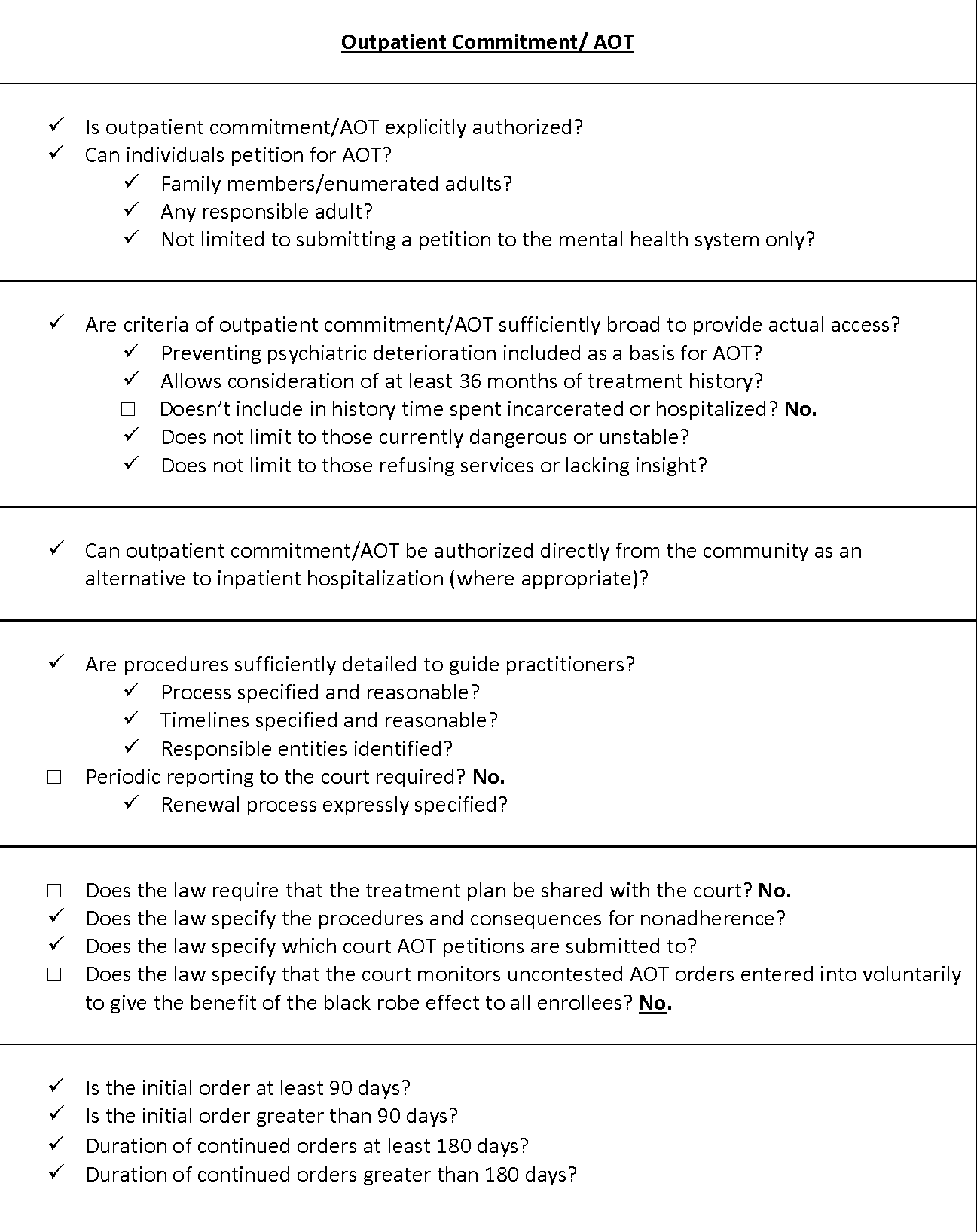
Amend Ala. Code § 22-52-10.3 to require the treatment plan to be shared with the court
- 3
Ala. Code § 22-52-10.3 to require periodic reporting to the court
- 4
Amend Ala. Code § 22-52-10.2 to exclude periods of incarceration or hospitalization in calculating the consideration period under (a)(3)a